
The Price of Play
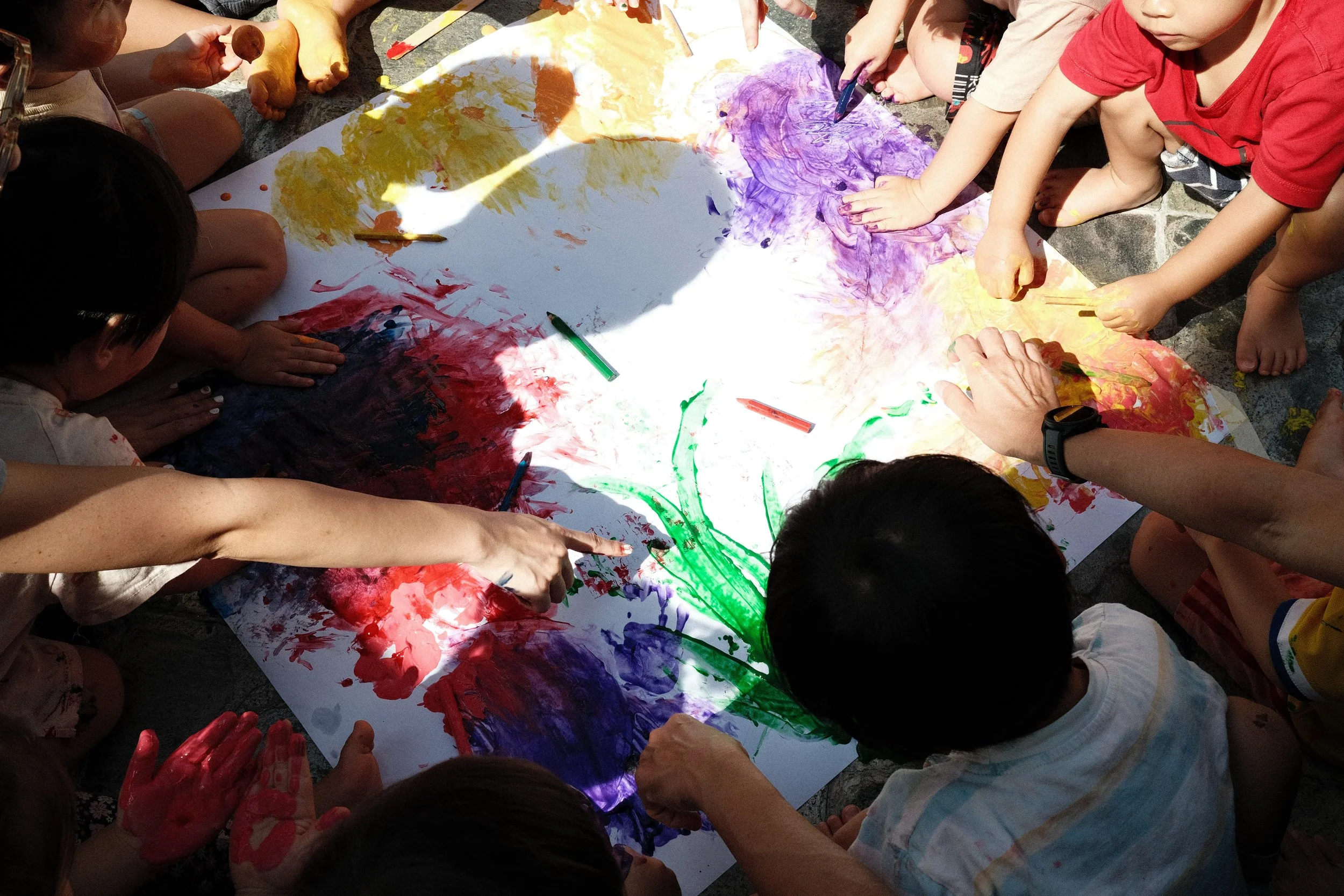
Everything in life has a cost. Economists call it opportunity cost: whatever you choose, you pay for it with the thing you gave up. Singapore understands this better than most nations on earth. We are, in many ways, a country built entirely out of deliberate trade-offs. From forests for housing (more on Maju forest in a another post), to leisure for growth, we make trade of the present for the future.
But there is one cost we never itemised. One line that never appeared on any national balance sheet…
For most of Singapore's history, play has been the most overlooked line item on the bill. The thing we traded away, quietly and repeatedly, to buy everything else. The tuition instead of the playground. The enrichment class instead of the void deck. The head start instead of the afternoon with nothing scheduled but together time.
Let's be clear from the start: this isn't an essay about blame, and it isn't an essay against enrichment. Every family that made that trade made it for reasons that were real (we'll come back to them) and like most things in life, the answer is balance, not abstinence. But the bill for it is arriving all the same.
Two headlines, one pattern
In recent months, two local news stories were shared over and over on Singaporean feeds.
The first, from CNA: "The other recession Singapore should be wary of." Not a financial recession, but a social one. The numbers were stark. The share of youths with no close friends doubled to 8%. The share of people with more than five close friends fell from 26% to 16%. Adults aged 21 to 34 (the generation raised in our most optimised, most scheduled, most enriched childhoods) are now the loneliest group in Singapore.
The researchers put it in one painful line: we are "living beside one another rather than with one another."
Read that again, slowly. An island of six million people, and everyone becoming more alone. Same block, don't really know our neighbours. Eating alone at the kopitiam, phone in hand. Netflix alone at night.
The second headline, from The Straits Times: babies born in 2025 fell below 30,000 — for the first time since independence.
And here is a third data point, it is older but stranger. Singapore has never actually ranked low on happiness indices. We usually top Asia, sitting around 30-something in the world. On paper, we're doing fine. But when Gallup once stopped asking people to rate their lives and instead asked what they felt yesterday (did you laugh? did you enjoy something? did you learn something interesting?) Singapore came in last in the world. The least emotional country. And in the World Happiness Report 2024, our residents aged 60 and above ranked 26th happiest in the world, while our under-30s ranked 54th.
We score brilliantly on the checklist of a good life. We score poorly on the feeling of one. And the deficit is largest in exactly the generation we optimised the hardest.
Now, no honest essay claims these three headlines have a single cause. Falling births track housing costs, dual-income economics, and caregiving realities. Loneliness has many causes. But run your finger down the invoice and you’ll notice one line item connects all three. This line item is the one nobody ever audited, and the only one that a parent, a teacher, or a preschool can actually do something about.
A scene from a preschool
Before we go further, hold this image.
A term ago, a girl at our school (call her L.) couldn't yet write in Chinese. Today she comes up to her teachers and asks for extra practice sheets, just to copy more characters. Nobody assigned them. There is no sticker, no star chart, no test. Her reason, in her own words: "It's fun."
A child begging for worksheets? The very thing children are supposed to endure… not request? If "play-based" makes you picture a child falling behind, keep L. in mind. By the end of this essay, she will make sense.
The most popular course in Yale's history
Here is a clue from the other side of the world.
The most popular course in Yale University's 300-year history is not economics, computer science, or law. It is a psychology class that teaches adults how to be happy. When Professor Laurie Santos launched "Psychology and the Good Life" in 2018, nearly a quarter of Yale's entire undergraduate population enrolled. Its online version has since reached over four million people.
We're smart enough to build MRT lines and send rockets to space. So why are so many of us... not happy?
Millions of stressed adults signed up for that course. Grown, successful, credentialed people paying to learn how to feel okay. The very winners of the exact race we train our children to run. Think about it for a moment. Something doesn't add up.
And the funny thing? A 4-year-old already knows everything in it…
Until, bit by bit, it gets trained out of them, by systems no single parent chose.
What the course actually teaches
Santos's course rests on two findings, replicated across decades of research.
Finding one: the things we chase don't actually work. More money, the bigger flat, the better title, the next milestone… None of them produce lasting improvement in how a person feels. Not because they're bad things, but because of a mechanism called hedonic adaptation: the brain gets used to every new circumstance and resets to baseline. The pay raise feels amazing for a few weeks. Then it's just your salary, the new baseline. Same with the new house, the new car, the new bag…Researchers call the resulting loop the satisfaction treadmill — running faster and faster to end up feeling exactly the same.
Finding two: the things that do work are the things we cut first. Things like fully experiencing an ordinary good moment. Or doing things because you like them, not for a reward. We skip the family dinner to finish work. We photograph the moment instead of being in it. We cancel rest time or play time for a bit more work, or one more class — and tell ourselves it's all "for the future."
The strangest part is that we already know this. Nobody has ever said on their deathbed, "I wish I worked more." So why do we stay on the never ending treadmill?
Psychologists have a name for it: miswanting. The part of the brain that wants things and the part that actually enjoys things are two different systems. And in adults, they have drifted so badly out of sync. We can chase something for years and feel almost nothing when we finally get it.
But here's the finding that should stop every parent and educator cold: nobody is born miscalibrated. Watch a toddler. She wants to build the tower — and she loves building the tower. The wanting and enjoying are perfectly matched. The calibration starts out correct.
Then, bit by bit, it gets changed. Children learn that the drawing matters because of the praise. The work matters because of the sticker. Play is the reward you get after the real stuff. Sticker chart by sticker chart, "what feels good" and "what you should chase" come apart. In a famous 1973 study, children who loved drawing were rewarded for drawing. And afterwards the children drew far less on their own. The reward killed the joy (Lepper, Greene & Nisbett, 1973).
That separation is where the unhappy adult begins. The Yale course, in the end, is not teaching anything new. It is remedial childhood. Four million adults, basically paying to reinstall factory settings.
What play actually is
Here is where most of the debate about "play versus academics" goes wrong. Play is not an activity. It is not the opposite of learning, and it is not "fun stuff" as opposed to "serious stuff."
Psychologist Peter Gray, who spent decades studying play, found the real dividing line is just one thing: who chose it.
If the child chose it, it's play.
If it was imposed, it's work.
Same worksheet, same paper, but completely different thing in the brain. Deci and Ryan call this need for ownership autonomy, one of our three basic human psychological needs.
Which means writing can be play. Maths can be play. Copying Chinese characters can be play. And that is exactly what you were looking at in L.'s story at the beginning of this essay. L. feels that “this is mine, I chose this”, and her brain runs on its own engine. That engine has a name: intrinsic motivation. It's the strongest fuel a learner can have, and it doesn't ever run out!
The evidence on how to build it is now solid. A 2022 review of 39 studies (Skene et al., Child Development) found that guided play (with real materials, a real learning goal, with the lead handed to the child) outperformed direct instruction on early maths and executive function, and outperformed free play on vocabulary. Structure and play are not opposites; the best early learning uses both.
And for children who need more scaffolding (those with learning support needs, or without language-rich play at home), guided play is precisely the point: the structure isn't removed, it is handed over gradually to the child.
One long-running comparison study, HighScope, followed children from direct-instruction and play-based classrooms for decades and found the play-based group fared better emotionally and socially in adulthood — though it only tracked a few dozen children in 1960s Michigan, so treat it as a signal, not a verdict. The signal points the same way as everything else.
There's one more thing play builds, and it may be the most important. The 85-year Harvard Study of Adult Development (the longest happiness study ever conducted) found that one thing predicts a good life above everything else. Not money. Not career. Not grades…. So what is it?
The one thing that predicts a good life above all else is people who love you. That’s friendship, family, connection, community. And childhood play is where humans learn to understand and build all these.
So when play gets cut, whether as a family habit, as a school priority or a cultural default — we are not trimming fat. We are cutting the input that builds intrinsic motivation, social connection, and the capacity to actually feel a good moment. Isn’t that the three things now missing from those Singapore news headlines? Play isn't the only line on the invoice. But it is the one we never checked.
Why we made the trade… and why it's forgivable
Before we present you with the solutions, here is one honest acknowledgement.
Parents did not take play off the schedule out of vanity. The PSLE is real. The job market is real. For many families (especially those without wealth to fall back on), academic preparation isn't ambition, it is mobility. Giving up play is the safest available known path for your child. Teachers, likewise, work inside a system that measures what is easy to measure: results. Everyone in this story was responding rationally to real incentives. The trade was made with love.
That's exactly why this needs saying out loud: a cost paid with love is still a cost. And there's one more piece of research that should lift the remaining guilt. Studies of thousands of parent-child interactions found that even the best, healthiest parents get it wrong with their child about 70% of the time. What builds a secure child is not a perfect adult. It's an adult who gets it wrong, then comes back to repair: "Just now I rushed you. Sorry. Show me the ants again?" (Tronick & Gold, The Power of Discord.)
When we repair, we are not failing. We are teaching our children how to fix things. After all, everyone will stumble and fall at some point in life. Our children need to know it is how we get up that counts.
How to rewire our brains: four habits
This next part is not just for parents. It's for educators, grandparents, bosses, and every grownup who recognised themselves somewhere on the treadmill. Because knowing all of this changes nothing — Santos calls that the G.I. Joe Fallacy: knowing is not half the battle. The brain doesn't update from information; it updates from practice. That's why her Yale course isn't built on lectures but on daily rewiring habits.
Here are her three. And a fourth, is our addition, and the one we believe Singapore needs most.
Habit 1: Savouring.
It means more than just "enjoy things". It means staying inside a good moment, on purpose, noticing it, stretching it out in enjoyment.
Neuroscientist Rick Hanson's practical rule of thumb: the brain needs about 12 seconds of sustained attention on a positive experience before it starts to keep it; less than that, and the moment leaves no trace.
Twelve seconds sounds like nothing — until you remember we swipe away a TikTok in two. In the doomscrolling age, 12 seconds is very long. And that's exactly the problem. But you've seen perfect savouring before, maybe this week: a child squatting at the void deck, watching ants, five whole minutes, fully present. That's not wasting time. That's the skill four million adults enrolled in a Yale course to relearn. It came factory-installed in every child. The rushing was taught and trained into children by all of us (honestly, including the grownups writing this).
Habit 2: Specific gratitude.
Not the "What do you say? Say thank you to auntie” kind of gratitude. Autopilot thank-yous change nothing in the brain. What measurably rewires the brain is a specific.
The gratitude formula is this: who + what they did + how it felt.
"Thank you, Sam, for playing with me when I was lonely."
Santos's research found that a detailed gratitude letter, read aloud to the person, produces one of the largest and longest-lasting happiness effects ever studied. Teach a child that formula and you're also teaching empathy. Write one yourself and you're repairing your own wiring. Do it for your community and you’re repairing the social recession, one thank-you at a time.
Habit 3: Concrete replanning — swap, don't add.
Don't put one more thing on the schedule. Take an hour currently spent on something the research says doesn't work, and redirect it to something that does.
One hour of screens, or one more enrichment class → one hour at the playground downstairs.
One proper dinner together, food on the table, phones face down.
One purchase less, one experience more.
Sounds simple enough? This particular habit might feel like a big decision as we ponder on all the “serious stuff” that we feel are all equally important.
Think of it not as a sacrifice — as an investment. It is small, and it is the exact opposite of "living beside one another."
Habit 4: Autonomous Play
And the fourth (the one we would add to the list): learn to play again. Anything you chose to do for no reason at all; not for money, not for likes, not for your CV, not even for self-improvement. Purely because you wanted to.
So, honest question: when was the last time you did something for no reason at all? Most adults go quiet at that question. But watch children at any playground. They don't make friends by networking. They make friends by playing. Maybe that was the secret all along. The children are fluent in how to live a good life. We grownups are the ones who sadly forgot.
One more tip, for parents and teachers specifically: choose learning environments that run on the child's engine. Ask any preschool one question: who chooses? Not "do you play here" (because everyone says yes). Ask where the child leads and where the teacher does, and whether the school can tell the difference.
What does a preschool have to do with any of this?
Everything, actually. The social recession researchers said it themselves: a "we-first" society cannot be built by the government alone. It's built in small circles, through families, neighbourhoods, communities and even classrooms.
And the preschool years are where these social circle starts. Early childhood is the last window in which the calibration is still intact, when savouring is still the default setting, and friendship is still made the honest simple way, by playing.
Whatever a society does in those years, it does to itself, twenty years later. A preschool is not just preparation for P1. It is the first draft of the adult. When multiplied across a generation, it becomes first draft of a country.
We know this belief can hold a community together, because it held ours. Wonder Yard Schoolhouse exists today only because it was saved. When our school was at risk of closing, it wasn't a ministry directive or an investor that stepped in. It was parents, teachers, grandparents and neighbours, organising themselves, because they believed a place that protects play and childhood was worth fighting for. People gave time they didn't have to spare. Families who could have quietly transferred out stayed and worked hard instead. That is what a "we-first society built in small circles" looks like when it isn't just a slogan. And this is the community our children now grow up surrounded by.
Where we stand
At Wonder Yard Schoolhouse, guided play is the core of all we do. Our teachers set up real materials and a real learning goal, then hand the lead to the child. Our students aren't playing instead of learning. They're learning because it feels like play! And they ask for more, unprompted, because the wanting and the enjoying are still perfectly matched (just like L. at the start of this essay). Our job is to keep them that way.
Everything in life has a cost. For decades, Singapore paid for its success with many things. Play was the cost we never itemised. Its share of the bill is showing up now, in our friendships and in the quiet faces of our most accomplished young adults.
But the wiring can be repaired. Children arrive already knowing how to live: curious, present and happy for free. The question was never whether they can afford to play.
It's whether we can afford, any longer, for them not to.
Wonder Yard Schoolhouse is a play-based preschool, saved and kept alive by its community. We believe childhood is the best thing for children, not a waiting room before "real life." Come watch guided play for yourself: WhatsApp +65 8867 2724 to book a visit.
References
CNA, "The other recession Singapore should be wary of" (social connection survey data)
The Straits Times, resident births in 2025 fall below 30,000
World Happiness Report 2024 (Singapore: overall ranking; under-30 vs 60+ age-group rankings)
Gallup Global Emotions (2012): Singapore lowest reported daily emotions
Santos, L., Psychology and the Good Life / The Science of Well-Being (Yale); "rewirements" incl. savouring, the gratitude visit, and concrete replanning
Santos, L. & Gendler, T. (2014), the "G.I. Joe Fallacy"
Lepper, Greene & Nisbett (1973), overjustification effect
Gray, P. (2013), Free to Learn; Deci & Ryan (2000), Self-Determination Theory
Skene et al. (2022), Child Development, meta-analysis of guided play
HighScope Preschool Curriculum Comparison Study (Schweinhart & Weikart) — small single-site sample; cited as directional
Waldinger & Schulz, Harvard Study of Adult Development
Bryant & Veroff (2007), savouring; Hanson, R., ~12-second encoding practice
Tronick & Gold, The Power of Discord
